Trane XL18i Two-Stage Systems in Burbank, CA
The homeowner answer: Burbank Trane HVAC services Trane XL-series two-stage AC and heat pumps including the XL18i across Burbank, CA from the Rancho Equestrian District to Chandler Park in ZIPs 91501 to 91523, tuning Climatuff staging, capacitor, contactor, and ComfortLink wiring for the hot valley floor, so call (213) 805-8137 or book online to schedule a tech, with wear-part repairs in the $150 to $450 lane.
Quick facts
- XL-series serviced: XL18i and historical XL16i two-stage AC and heat pumps.
- Two-stage Climatuff compressor; communicating-capable with XL824/XL850.
- Top failures: dual-run capacitor and contactor ($150-$450 in 2026 SoCal).
- Spine Fin all-aluminum coil; R-410A about $50-$80/lb installed.
- Long low-stage runtime suits small, sealed Burbank cottages.
- Service ZIPs: 91501, 91502, 91504, 91505, 91506, 91523. Hours: Weekdays 7am-6pm, weekends 8am-2pm.
- Independent; in-warranty compressors referred to the authorized dealer first.
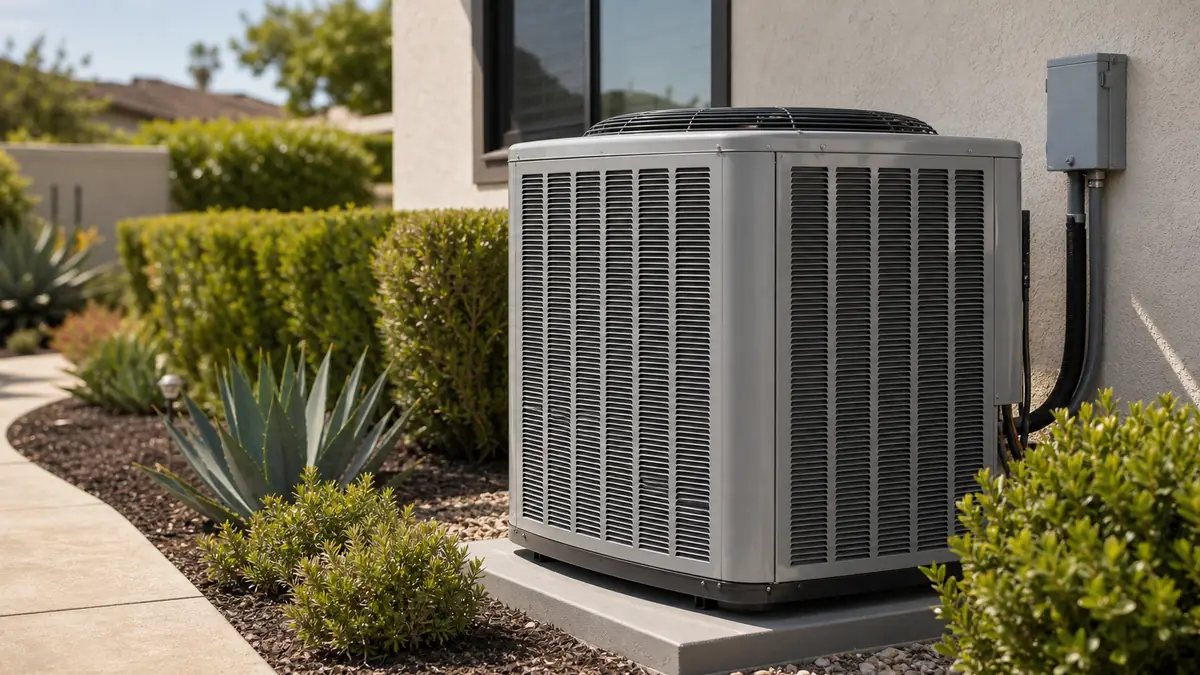
Why does two-stage cooling help in Burbank?
A single-stage condenser is either full-blast or off. On the Burbank valley floor, that means it blasts cold for a few minutes, satisfies the thermostat, and shuts down - then repeats, leaving rooms uneven and damp. A two-stage XL18i runs most of the day on low stage, moving air gently and pulling humidity, and only ramps to high stage when a 90-95 F afternoon demands it. That longer, gentler runtime is a better match for tight pre-war cottages than the oversized single-stage units common here.
| Symptom | Likely cause / first check | Typical cost lane |
|---|---|---|
| Hums, won't start in the heat | Failed dual-run capacitor | $150 - $450 |
| Clicks, compressor never engages | Pitted/welded contactor | $150 - $450 |
| Never drops to low stage | Control/staging wiring or comm fault | $139 - $600 |
| Weak cooling, iced coil | Low refrigerant at Spine Fin coil | $225 - $1,500 |
| Outdoor fan dead, compressor hot | Condenser fan motor or fan capacitor | $150 - $900 |
| Breaker trips on start | Shorted compressor windings or wiring fault | $150 - $3,500 |
| Heat-pump XL18i won't heat | Reversing valve or defrost-board fault | $300 - $1,200 |
Which XL-series models does this cover?
The XL line is Trane's two-stage, enhanced-efficiency tier - one notch below the variable-speed XV units and a clear step above the single-stage XR workhorses:
- XL18i (current two-stage): the model most Burbank homeowners mean. Two-stage Climatuff compressor, all-aluminum Spine Fin coil, communicating-capable with ComfortLink II. Available as an AC and as a heat pump.
- XL16i (historical two-stage): the prior-generation two-stage unit still in plenty of valley homes; it services like the XL18i, with capacitor and contactor as the top wear parts.
- Heat-pump XL variants: add a reversing valve and a defrost board for heating, so a no-heat call on a heat-pump XL18i points at those parts rather than the cooling side.
All share the Climatuff two-stage compressor and the Spine Fin coil, so the repair playbook is consistent: cheap electrical wear parts are common, the compressor itself is durable, and the staging depends on a matched communicating control.
What controls the XL18i staging?
The XL18i is communicating-capable, which means a matched ComfortLink II control (XL824 or XL850) unlocks proper two-stage operation and plain-language fault alerts. Wire it to a generic single-stage thermostat and you've bought two-stage hardware running on one speed - all cost, none of the comfort or efficiency benefit. When an XL18i "won't stage," the fix is almost always at the control or the staging wire, not the compressor.
What does installing an XL18i take in a pre-war Burbank home?
The constraints are the lot and the ducts, not the condenser. Burbank's 1920s-1940s cottages sit on narrow lots with the condenser crammed into a side setback, so we plan clearance for airflow and service access before placement - a unit boxed against a fence runs hot. The line set usually routes through an existing chase to the indoor coil, and we re-evaluate it rather than reusing a leaky old set blindly. Title-24 in Climate Zone 9 typically pulls in refrigerant-charge and airflow verification on a replacement split system, and HERS duct verification where ducts are altered, so the paperwork is part of the job.
The make-or-break detail is airflow. An XL18i's long low-stage runtime only pays off if the return can feed it - roughly 350 to 400 CFM per ton. Many of these cottages have an undersized 1930s return that will choke a new two-stage unit into short-cycling, so we measure total external static pressure first and resize the return where needed before commissioning the system.
Repair the XL18i or step up to variable-speed?
Most XL18i repairs are the cheap wear parts - capacitor, contactor, a charge top-off after a coil leak - so a healthy XL18i is worth keeping. When the compressor itself fails out of warranty on an older unit, that's the decision point: a like-for-like XL18i, or the modulating XV20i for a larger or hillside home. The repair-or-replace guide runs the age and cost thresholds.
Common questions about the Trane XL18i in Burbank
Is a Trane XL18i a good fit for a Burbank bungalow?
Often, yes. Two-stage Climatuff cooling runs long and quiet on low stage for most of a Burbank day, then kicks to high stage on a 95 F afternoon. That long low-stage runtime dehumidifies and holds temperature better than the single-stage XR units many valley installers default to on small lots.
Why is my XL18i only running on high stage?
If a two-stage XL18i never drops to low, the cause is usually the control: it needs a communicating XL824 or XL850, or a correctly wired two-stage signal. A generic thermostat or a comm fault forces it to single-speed, which raises runtime cost and wear. We check the staging wiring first.
What fails most on a Trane XL18i in Burbank heat?
The dual-run capacitor and contactor, same as any condenser on the valley floor, plus the occasional refrigerant leak at the Spine Fin coil. The two-stage compressor itself is durable; most XL18i calls are the wear electrical parts, which fall in the $150-$450 lane.
How does the XL18i compare to a variable-speed XV20i for my home?
The XL18i gives you two stages; the XV20i modulates continuously for the tightest control and highest SEER2. On a small, well-sealed Burbank cottage, the XL18i is often the value sweet spot. On a larger or hillside home with bigger swings, the XV20i earns its premium. We size to the load, not the brochure.
Is an XL18i better than a single-stage XR for a Burbank bungalow?
Usually, for comfort. A single-stage XR runs full-blast then off, which leaves rooms uneven and damp on a small lot. The XL18i's low stage runs longer and gentler, dehumidifies better, and holds a steadier temperature through the valley afternoon. The XR costs less up front and is still a solid workhorse; the XL18i is the comfort upgrade if the budget allows.
Does an XL18i heat pump need a backup furnace in Burbank?
Rarely much of one. Burbank winters are mild, so a heat-pump XL18i carries the heating load most days on its own, with the gas furnace or electric strips only backing it up on the coldest mornings. We size the heat pump to the cooling load first, since cooling is the bigger demand on the valley floor, then confirm the heating backup is right for the few cold snaps.