Trane HVAC Maintenance Plans in Burbank, CA
The homeowner answer: Burbank Trane HVAC runs seasonal Trane maintenance plans across Burbank, CA where condensers in Chandler Park and the Rancho Equestrian District (ZIPs 91501 to 91523) endure 40 to 55 days a year over 90 F, so call (213) 805-8137 or book online to schedule a spring visit checking the capacitor, coil, charge, and drain before the heat hits, with the diagnostic about $139.
Quick facts
- Seasonal plans timed to the Burbank cooling calendar - spring tune-up first.
- Checks capacitor microfarads, contactor, coil, charge, superheat, drain, blower draw.
- Documented service supports Trane registered-warranty requirements.
- Burbank condensers run 40-55 days a year above 90 F.
- Service ZIPs: 91501, 91502, 91504, 91505, 91506, 91523.
- Hours: Weekdays 7am-6pm, weekends 8am-2pm. Ask about current financing when you book.
- Independent, insured contractor.
Why does timing matter for Burbank AC maintenance?
The valley floor gives you a window. Burbank's heat builds from late spring and holds 40-55 days a year above 90 F, with Hollywood Burbank Airport logging valley-record highs. A capacitor that reads slightly low in March will fail under a 95 F afternoon load in July - exactly when every shop is booked and you're stuck in a hot house. Spring maintenance moves that failure to a planned visit.
The dual-run capacitor is the part we replace most after a heat spike, so a microfarad reading in the off-season is the single highest-value check on a Trane condenser here.
| Check | Component | What it prevents |
|---|---|---|
| Capacitor reading | Dual-run capacitor | Mid-summer no-start failure |
| Contactor inspection | Contactor | Welded/pitted contacts, hard starts |
| Coil clean | Spine Fin condenser coil | High head pressure, lost capacity |
| Charge / superheat | Refrigerant circuit, TXV | Iced coil, weak cooling, compressor strain |
| Drain flush | Condensate drain/pan | Water damage and float-switch shutdowns |
| Blower amp draw | ECM or PSC blower motor | Failing motor, weak airflow, high-limit trips |
| Static pressure read | Return/supply ducts | Hidden airflow restriction that strains the system |
| Stored-alert pull | XL850/XL824 control | Catches an intermittent comm fault before it strands you |
What does a full Trane maintenance visit include, step by step?
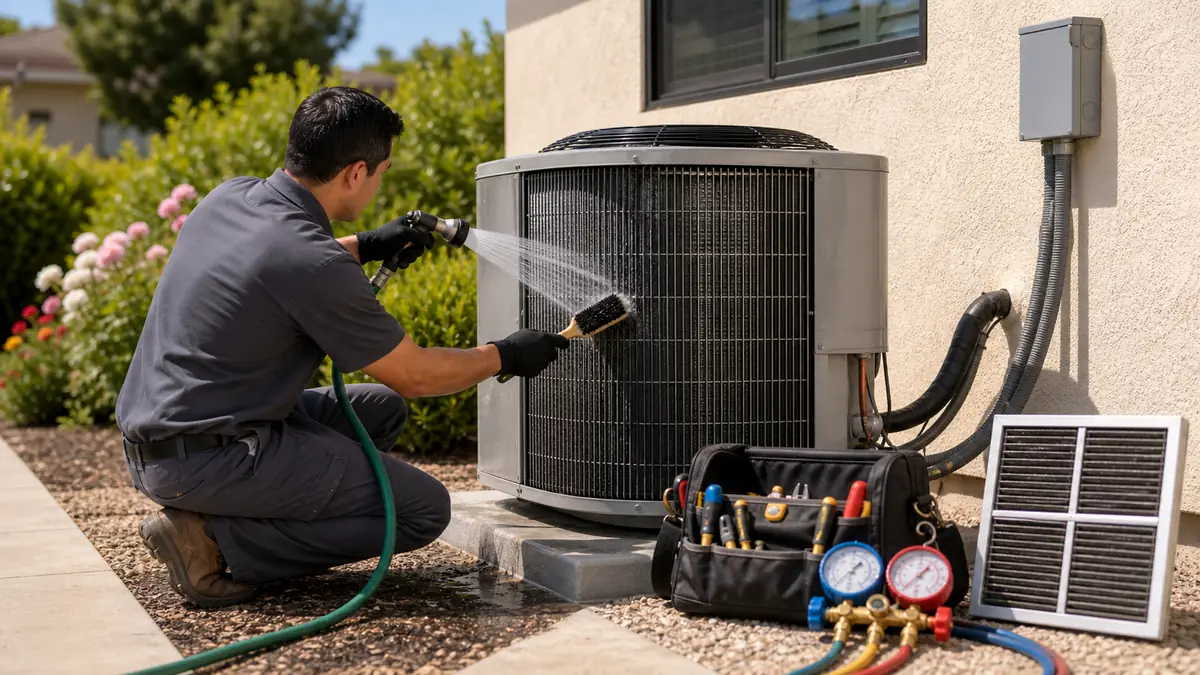
The cooling side comes first because that is the Burbank workload. We shut power at the disconnect, pull the capacitor and read its microfarads against the nameplate - a dual-run cap that has drifted more than about 6 percent under rating is the swap that saves a July no-cool. We inspect the contactor points for pitting, then clean the all-aluminum Spine Fin condenser coil, because a coil packed with valley dust and cottonwood fluff raises head pressure and costs capacity on the hottest days.
Then the refrigerant and airflow side. We connect gauges, read superheat and subcooling, and confirm the charge matches the Trane charging chart for the outdoor temperature rather than topping off blind. We clear and flush the condensate drain and test the float switch, check blower amp draw against the motor rating, measure total external static pressure to catch a strangled return, and tighten the lugs at the disconnect and contactor where valley heat cycling loosens connections. On a communicating system we pull any stored XL850 alerts. Each reading is logged so the next visit has a trend, not a blank sheet.
What gets done in spring versus fall in Burbank?
The two visits target different equipment. The spring visit - ideally March through May, before the valley heat lands - is the cooling tune-up: capacitor, contactor, coil clean, charge, drain, and static pressure, so the condenser is ready for 40 to 55 days above 90 F. The fall visit is the short heating check on the gas furnace that sits idle most of the year: igniter resistance, flame-sensor microamp reading, inducer and pressure-switch operation, and temperature rise across the heat exchanger, so the first cold-snap call for heat does not become a no-heat emergency. In Burbank the spring cooling visit is the higher-value of the two.
What does Burbank's climate do to an unmaintained Trane system?
It accelerates every wear path. In Title-24 Climate Zone 9 on the valley floor, a Trane condenser logs far more runtime hours than a coastal unit, and the 40-to-55-day stretch above 90 F means the compressor and capacitor work near their limits for weeks at a time. Heat cooks dielectric capacitors faster, so a cap that might last a decade in a mild zone often drifts low in five to seven years here. Side-yard placement on narrow pre-war lots traps heat around the Spine Fin coil, and valley dust plus springtime cottonwood fluff blanket the fins, both of which raise head pressure and force the compressor to run hotter.
Indoors, the long cooling season fills condensate drains with algae, which trips float switches and stops cooling mid-summer. None of this is exotic - it is the predictable result of a hard-working system in a hot microclimate, which is exactly why an off-season visit that reads the capacitor, cleans the coil, and flushes the drain pays for itself before July.
How does maintenance protect my Trane warranty?
Trane's registered residential warranties expect the system to be serviced and maintained. If a compressor or coil claim ever comes up, documented annual maintenance keeps that conversation simple. We log each visit with readings so the paper trail is there. If your unit is in warranty, covered-part work still goes to the manufacturer's authorized dealer first - we keep the maintenance side clean alongside that.
What readings do you leave the homeowner with?
A maintenance visit should hand you numbers, not a vague thumbs-up. We log the capacitor microfarad reading against its nameplate rating, the superheat and subcooling so you can see the charge is correct for the day's outdoor temperature, the blower amp draw against the motor rating, and the total external static pressure. Over two or three years those readings become a trend - a capacitor sliding toward its tolerance limit, a static pressure creeping up as a filter loads or a return restricts - which is what lets us call a failure before it happens instead of after.
We also flag what we deliberately do not touch. If the coil is clean, the charge is dead-on, and the parts read healthy, we say so rather than inventing a refrigerant top-off or a part swap a sound system does not need. A topped-off charge on a system that was not low is a sign of a leak being masked, not a service being performed, so we chase the actual reading instead.
What maintenance won't fix - and what will
A tune-up keeps a healthy system healthy; it does not undo a wrong-sized install or a crushed return. If our spring visit keeps flagging high static pressure or a far room that never cools, the answer is duct work, not another filter. And when a condenser is past 12 years and limping every season, the honest move is the repair-or-replace math rather than annual band-aids.
Common questions about Burbank maintenance plans
When should I tune up my Trane AC in Burbank?
Spring, before the valley heat lands. Burbank runs 40-55 days a year above 90 F starting in late spring, so a March-to-May coil clean, capacitor reading, and refrigerant-charge check catches weak parts while you can still schedule, not during a July no-cool emergency.
What does a maintenance visit actually check on a Trane system?
We read the dual-run capacitor against its rated microfarads, inspect the contactor for pitting, clear and flush the condensate drain, clean the Spine Fin condenser coil, verify refrigerant charge and superheat, check blower amp draw, and tighten electrical connections. On communicating units we pull any stored XL850 alerts.
Is a maintenance plan worth it on a newer Trane system?
Yes, partly to protect the warranty. Trane registered warranties expect documented annual service; skipping it can complicate a future compressor or coil claim. A logged spring visit keeps the paperwork clean and catches small issues before they cascade.
Does maintenance help my old bungalow's airflow problems?
It catches the airflow killers - clogged filters, a dirty coil, a slipping blower - but it does not resize a 1930s return. If a visit keeps flagging high static pressure, that points to a duct fix, which we handle separately rather than pretending a tune-up solves it.
How is a maintenance plan priced against a single emergency call?
We price the plan against what one July no-cool visit costs you - the roughly $139 diagnostic plus a rushed $150-$450 capacitor or contactor at peak season, often with a wait. A planned spring visit catches that weak part in the off-season at a known price. We lay the math out honestly rather than selling a plan that does not pay for itself on a small home.
How often should a Burbank Trane system be serviced?
Once a year at minimum, twice if you want both halves covered. On the valley floor the cooling tune-up in spring is the must-do because that is where the runtime and failures are. A fall furnace check is lighter but worth it before the first cold snap. Trane registered warranties expect documented annual service, so an undocumented gap can complicate a future claim.